Supporting Good, Clean, and Fair Food

The Slow Food USA Blog

San Diego Schools Reap Benefits of Cooking Meals from Scratch

Posted on Mon, February 08, 2010 by Slow Food Intern User

by intern Christine Binder

High school students in Escondido, California are sprinting to the lunch line.

Since the Escondido Union High School District began cooking meals from scratch in 2006, participation in breakfast has increased nearly 270%, and lunch participation increased 360%. The four high schools in the district serve around 5,000 meals a day, according to an article in The San Diego Union-Tribune.

For breakfast, students are offered items such as homemade muffins, oatmeal from scratch, and skillet scrambles made from real eggs, potatoes, and cheese. Lunch entrees include teriyaki chicken bowls with brown rice, broccoli, and carrots, and grilled chicken tacos with fresh salsa and beans. The food is made from scratch in the high school kitchens using fresh meat and produce, whole grains, and low-fat cheese. Students agree that this is a major improvement over the unhealthy and unappetizing pre-packaged meals served in previous years.

The best part about the food cooked from scratch? Students are performing better in the classroom, teachers say. According to Pamela Lambert, director of student nutrition services, “The change means that students are eating much healthier, and plenty of studies show the positive effect of proper nutrition on academic ability.”

Stories like this show that delicious and healthy slow food in schools is exactly what children need in order to succeed. Within the next several weeks, Congress will reauthorize the National School Lunch Program. This only happens every five years, so no time is better than now to contact your elected officials and make it known that kids want and need real food in schools. Check out Slow Food USA’s Time for Lunch Campaign to find out more, and stay tuned here for Vilsack’s announcement of his priorities for the Child Nutrition Act [ n.b. this announcement was scheduled for today, but due to the massive dump of snow on D.C. over the weekend, it has been postponed].

1 Comments | Categories: School Food

Livestock Odds and Ends

Posted on Fri, February 05, 2010 by Jerusha Klemperer

1. Biopic about Temple Grandin, humane slaughterhouse designer and generally fascinating person, stars Claire Danes and airs this weekend on HBO.

2. NAIS no longer a problem! Niiiiiiiice. “Faced with stiff resistance for ranchers and farmers,” the USDA has dropped its National Animal Identification System proposed program; this comes as good news to small-mid scale producers and their supporters, who felt it would have placed on undue burden on them.

3. Weird unpronouncable things allowed in your meat: via Bob Perry at University of Kentucky, here is the latest list of what weird stuff is allowable in commodity meat & poultry from the USDA.  As he says: “and people wonder why I only buy from local farmers......”

[photo courtesy of Paul Stevenson, flickr creative commons]

Celebrating an Artisan Cidermaker

Posted on Thu, February 04, 2010 by Jerusha Klemperer

by Ben Watson, Chairman, Slow Food USA Biodiversity Committee

Terrence Maloney (1940-2010)

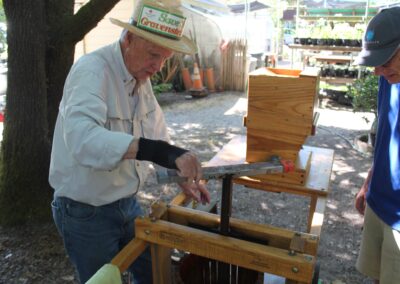
A few days ago I received the sad news of the death of Terry Maloney, 70, of Colrain, Massachusetts. Terry died suddenly at home on January 29, ironically enough as the result of an accident that occurred while he was filtering a batch of his West County Cider.

Terry and his wife Judith began making cider more than 25 years ago, after they moved from California to western Massachusetts. In Franklin County, the area where they settled, there weren’t any of the wineries that they had worked on out west, but there was a long local tradition of apple growing and cidermaking, and the Maloneys set out to produce high-quality hard ciders, in an effort to both reflect and revive a New England cider-drinking culture. Along with New Hampshire’s Stephen Wood and other early producers, the Maloneys today are recognized as among the first pioneers in what has truly become an American cider renaissance. New producers – making increasingly brilliant and sophisticated ciders – have sprung up in the Pacific Northwest, the Great Lakes region, the Piedmont South, and other areas of the country. Many of them owe thanks to Terry Maloney for inspiring them through his example and by setting a high standard of excellence for every American cider producer.

The community of cidermakers and cider-lovers is very close-knit (though we are all fiercely independent and opinionated too!), and the news of Terry’s death has shocked and saddened all of us. He will long be remembered by everyone who knew him as a gentle, soft-spoken, thoughtful man and as someone who was always ready to share his own knowledge with others and to learn from their experiences. Part of his legacy will be Franklin County Cider Days, which started out as a modest regional event for local home brewers and amateur cidermakers; in 2009 the festival celebrated its 15th anniversary, and although it still is rooted in the hill towns and orchards of western Massachusetts, it has become one of the world’s premier cider events. No doubt Cider Days 2010, always held on the first weekend in November, will be dedicated to the life and work of this great and good man. But it won’t be the same without him.

More after the jump

School Lunch debate picking up speed

Posted on Thu, February 04, 2010 by Jerusha Klemperer

The debate around school lunch and child nutrition is gathering major momentum.  The 2 big reasons why:

Food safety updates and action items

Posted on Wed, February 03, 2010 by Jerusha Klemperer

Poop and salad: two great tastes that go great together? Bleccccch.  Consumer Reports tested bagged leafy greens and found “bacteria that are common indicators of poor sanitation and fecal contamination—in some cases, at rather high levels.”

Scale-appropriate legislation: With all of these discoveries of food contamination, there is a need for some regulation--but as the food movement has been squawking about for several months now, it is IMPERATIVE that small and mid sized operations are not thrown in together with the big guys.  A new Act on the table might help. As the National Sustainable Agriculture Coalition explains: “Fortunately, Senator Debbie Stabenow (D-MI) has introduced the Growing Safe Food Act (S. 2758) to create a national food safety training and technical assistance program.  It would deliver training and technical assistance appropriate to small and mid scale farms to reduce the incidence of food borne illness.” Click here to find out how you can express your support, by urging your Senator to co-sponsor the Growing Safe Food Act (S 2758). 

How about a crowd-sourced sustainable cookbook?

Posted on Tue, February 02, 2010 by Jerusha Klemperer

We’ve been talking a bunch recently on here about the future of food writing--how is being affected by new media?  How come awesome food bloggers end up getting book deals, bringing it all back to the old fashioned paper format?  (i.e. will the future be jet packs and silver jumpsuits? or something more interesting we haven’t thought of yet?)

That’s why I am interested in this new crowd-sourced digital cookbook--Mastering the Art of Sustainable Cooking-- produced by Brighter Planet and their online community. It’s got energy conservation tips, stories, and recipes from different submitters from around the country. I like the hodgepodge mix--how to save energy while BBQing (tin foil, baby); how the freezer can be your friend; stuff like that. I also like how it was made--reminds me of the old church cookbooks, spiral bound and community derived. It’s real short--not so very much there there, but it’s a cool beginning. Click here to check it out.

Brighter Planet is a web-based community that is all about getting people engaged in the fight against climate change. On the site, people can measure their climate impact--various actions are connected to carbon footprint numbers, and by tracking your actions you can watch your footprint change over time as you learn to live more carbon free. Also, it seems to be all about community--online community, that is.  So they’ve got a bunch of online campaigns, including the contest they hosted to create this cookbook (with an introduction by Gary Hirschberg of Stonyfield Yogurt).

One teacher’s brave look at school lunch

Posted on Mon, February 01, 2010 by Slow Food Intern User

by intern Jackie Fortin [a closer look at the story we touched on in last week’s “Latest School Lunch News.”]

“Let’s think about what we give students to ingest,” says Mrs. Q, an anonymous Illinois elementary school teacher who is choosing to eat school lunch every day in 2010 and review the results in her blog, Fed Up: School Lunch Project.

Not one to “make waves” in her professional life, Mrs. Q considers herself a “whistleblower” for school lunch.

“I think every child no matter how much money their family has deserves to eat quality food at school,” she said. “Most teachers do feel the same way that I do … We’ve all discussed the lunches and how bad they are in passing. Then we go back to teaching. No one has done much.”

Mrs. Q’s project, which began Jan. 3, consists of buying a $3.00 school lunch Monday through Friday, bringing it back to her room for a ‘working’ meal, and taking pictures of each tray’s plastic-wrapped contents with her phone camera.

Despite her concealed identity, she admits to feeling “majorly exposed” and nervous about the traffic her blog is getting three weeks deep. “I could absolutely lose my job over this,” she wrote.

But the overwhelmingly supportive and encouraging comments are piling up. She has been interviewed by Small Bites blogger Andy Bellatti as well as by Robin Shreeves of Mother Nature Network, nutritionist Marion Nestle, Serious Eats, Chow.com, Food Safety News, Diets in Review.com, Treehugger, Grist and several bloggers have all cited Fed Up in online posts.

According to Bellatti, the project, likened to “a more realistic Super Size Me...perfectly captures the problems of school lunch — poor nutrition, odd flavors and textures, environmental unfriendliness (plastic, plastic, and more plastic!), and the effects of cheap crop subsidies on individual health.”

More after the jump

Dinner from the Dumpster

Posted on Thu, January 28, 2010 by Slow Food Intern User

by Emily Vaughn

No matter how sustainably produced your food purchases are, food that goes uneaten is a waste of resources and a major pollutant.  Food scraps make up nearly 13 percent of municipal waste in the US. That percentage includes discarded trimmings like carrot peels and apple cores, but the bulk consists of surplus or aesthetically imperfect items from food service providers. Organic material like food waste produces methane as it decomposes in landfills: a greenhouse gas far more potent than carbon dioxide.  What’s a conscientious consumer to do? 

One solution is to reclaim discarded food from the dumpster.  The new documentary, Dive!: Living off America’s Waste by newcomer director Jeremy Seifert follows a lighthearted a group of bearded, freegan friends as they rifle through the trash bins of LA’s big-box grocery stores, and rattle off the code of containering (eg. “Never take more than you need”). One dive’s haul includes plastic cartons of blueberries, presumably thrown out because a handful of berries were bruised or moldy.  The next morning the director’s towheaded toddler grins with a mouthful of blueberry pancakes as he explains the meal’s origin to the camera. 

But after a few dives that reveal the extent of the food available for scavenging, the film matures from a youthful how-to into a serious examination of the industrial and corporate practices that make dumpster diving possible.  In a pivotal scene with cleverly balanced gravity and cheek, Seifert does some quick math—written out on a driveway in freecylced Reddi-wip—to show that reclaiming just one percent of the food thrown out in LA County would more than triple the food deficit of its food banks.

The focus then shifts to getting grocery stores to step-up their donation programs, and inspiring citizens to make it happen.  The film closes with a quote from Noam Chomsky, “Change and progress very rarely are gifts from above—they come out of struggles from below.Ԡ And it looks like the dumpster is the new battleground.

Dive! is screening at several west coast film festivals in coming months. You can also set up a screening in your area or purchase a copy online for $10.

Flagstaff Youth Garden

Posted on Wed, January 27, 2010 by Slow Food Intern User

by Alaine Janosy

Youth gardens have become an integral part of spreading Slow Food USA’s message of good, clean, and fair food to young people throughout the country. Conserving and promoting a biologically diverse food system is a critical element of this message so those managing such gardens are encouraged to plant crops found on the Slow Food USA Ark of Taste. This year, Slow Food Northern Arizona co-leader, Gay Chanler, was instrumental in ensuring US Ark of Taste foods were part of the Flagstaff Youth Garden at the Museum of Northern Arizona.

The garden has been experimenting with the three sister crops of the Southwest—corn, beans, and squash—since it began in 2002. This past summer, Anna Normandin, garden coordinator and undergraduate student at Northern Arizona University, wanted to expand the diversity of the garden by growing out eight varieties from the USA Ark of Taste. Her goal was not only to increase the number of heirloom varieties in the garden, but also to find out how these varieties would grow in an arid environment 7,000 feet above sea level.

Anna and Gay worked together during the seed selection process, using information from the Native Seeds/SEARCH catalog to select varieties most likely to flourish in the Flagstaff climate. Native Seeds/SEARCH donated the seeds selected for the garden, including L’Itoi Onions, Palomas de Chihuahua Popcorn, Nambe Supreme Chili and Valarde Chili, Amaranth Paiute, New Mexico Tomatillo, Colorado Bolita Beans, Hopi Red Lima Beans, and Hopi Yellow Pole Beans.

More after the jump

How locally owned food enterprises drive local economic development

Posted on Tue, January 26, 2010 by Jerusha Klemperer

Do you appreciate the value of local food? Have curiosity about the role that local food business can play in economic development, community development and food access?

And one more question: Will you be in DC this Thursday?  If so, you can attend these panels live, and hear Deputy Secretary of Agriculture Kathleen Merrigan weigh in on the benefits of locally owned food businesses.  If not, you can listen to them on your computer and join in from anywhere at all.

The Wallace Center at Winrock International and the Business Alliance for Local Living Economies (BALLE) present a pair of panels on their newly released report Community Food Enterprise: Local Success in a Global Marketplace (CFE). They have profiled 24 locally owned food businesses in the U.S. (and internationally), including The White Dog Cafe in Philadelphia, Lorentz Meats in Cannon Falls Minnesota, and The Intervale Center in Burlington Vermont.  These studies examine the financial, social, and environmental performance of each enterprise, revealing milestones, challenges, and strategies for replicating successes, and demonstrating how locally owned food enterprises are an increasingly powerful driver for local economic development.

Check ‘em out!

To register to attend the DC event, click here.
To register for the online broadcast, click here.

Find Slow Food in your State